Tag Archives: sportscience

Last study leg not performed. Due to successful third leg no change in study outcome.

The last of the planned four study legs has not been performed. This is fortunately not harming the outcome of the main parameters of the study protocol: 1. Comparison of shape of flow volume curve in normobaric and hypobaric hypoxia. 2. Comparison of VO2max ml/kg 3. Comparison of SaO2 values and Lake Louise Score during hike (hypobaric) and simulated hike (normobaric), because all measurements already worked fine on the third leg (hypobaric hike on Mauna Kea).  The last leg was to prove if an overnight stay at a moderate altitude of 2000-2800m would change outcome on some of the parameters based on a new theory that already a few hours at moderate altitude deliver enough acclimatization.

After the third leg there was some argueing with administrative officials of the Mauna Kea UH administration due to a ranger intervention transporting three study volounteers down from summit to our second parked car at the visitor center, because they seemed mountain sick. Therefore Mauna Kea UH administration did not allow us to stay overnight near the visitor center at 2800m and the state park camp site at 2200m was closed. A plan B to stay at 2200m at a parking spot near the start of the road to the Mauna Loa weather observatory, first agreed on by all participants, failed because three study members did not volounteer on the actual day and performing the leg with just three volounteers wouldn’t have made sense. N.Netzer


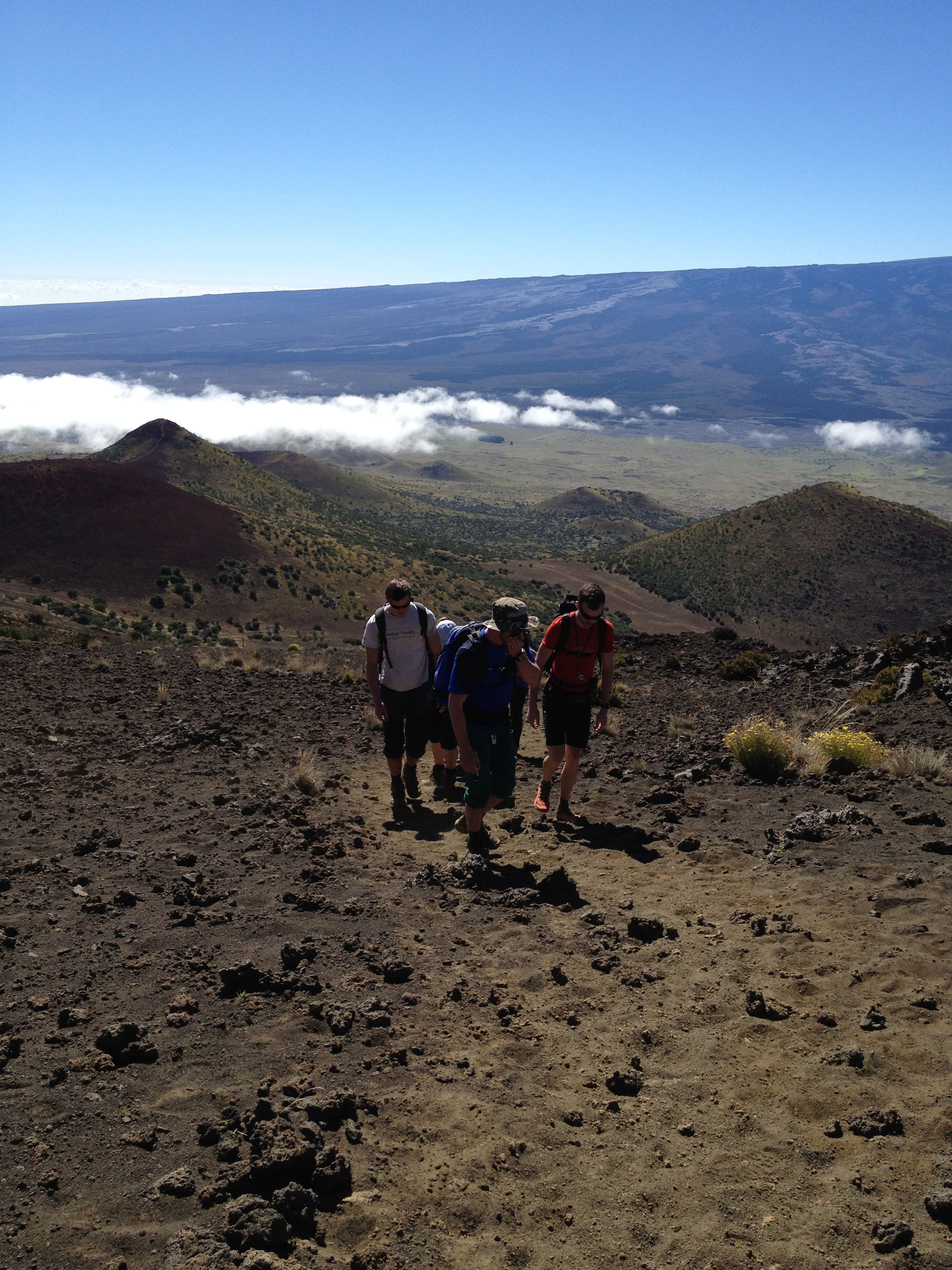
Picture: Students at 3200m on Humuula trail on third study leg. Mauna Loa in the background
IMG_2540

uibk hbi mauna kea study group

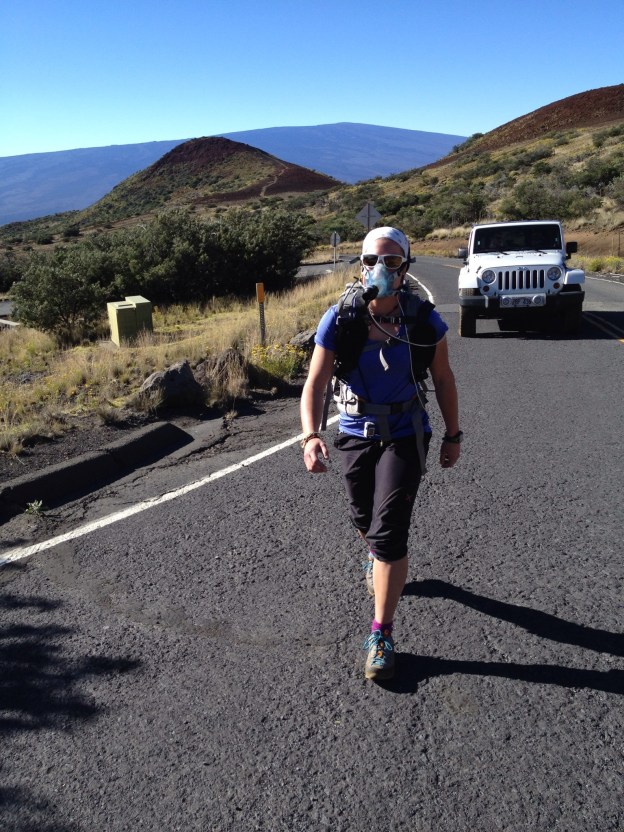
On day 4 of our study group-master course excursion we started with the field study leg of our hypobaric-normobaric comparison study at Mauna Kea. The primary outcome parameter of our comparison between the hike to Mauna Kea summit in the field and simulated at the Hermann Buhl institute in Bad Aibling is the shape of the flow volume curve and the single breath to breath comparison in the ergospirometry. On the picture you see one of the subjects with the oxycon mobile at the start point of the hike near the Mauna Kea visitor center at 2800m altitude. The ergospirometry has been repeated in each of the six subjects at the summit at 4169m altitude after the standardised hike in six hours plus one hour breaks.
Secondary parameters are the oxygen saturation and heart rate as well as Lake Louise score at several time points during the hike.
The conditions on this first field day were unexpectedly tough with constant sunshine, no wind and unusual temperatures at all altitudes above 85degrees Fahrenheit respectively above 26-27 degrees celsius. This lead to unexpected electrolyte loss through more sweating than in the simulated hike.
Performing the ergospiro at the summit took until darkness with a beautiful sunset and clear view on the stars but temperatures dropping to 38 degrees F, 1-2 degrees Celsius.
We are thankful to a National Park UH Ranger who drove half of the group down to our second car before the last ergospiro at 7.07pm was finished.